Set 08 of 08
Cenote Meaning Explained for First-Time Swimmers
- First played
- Length3 min read
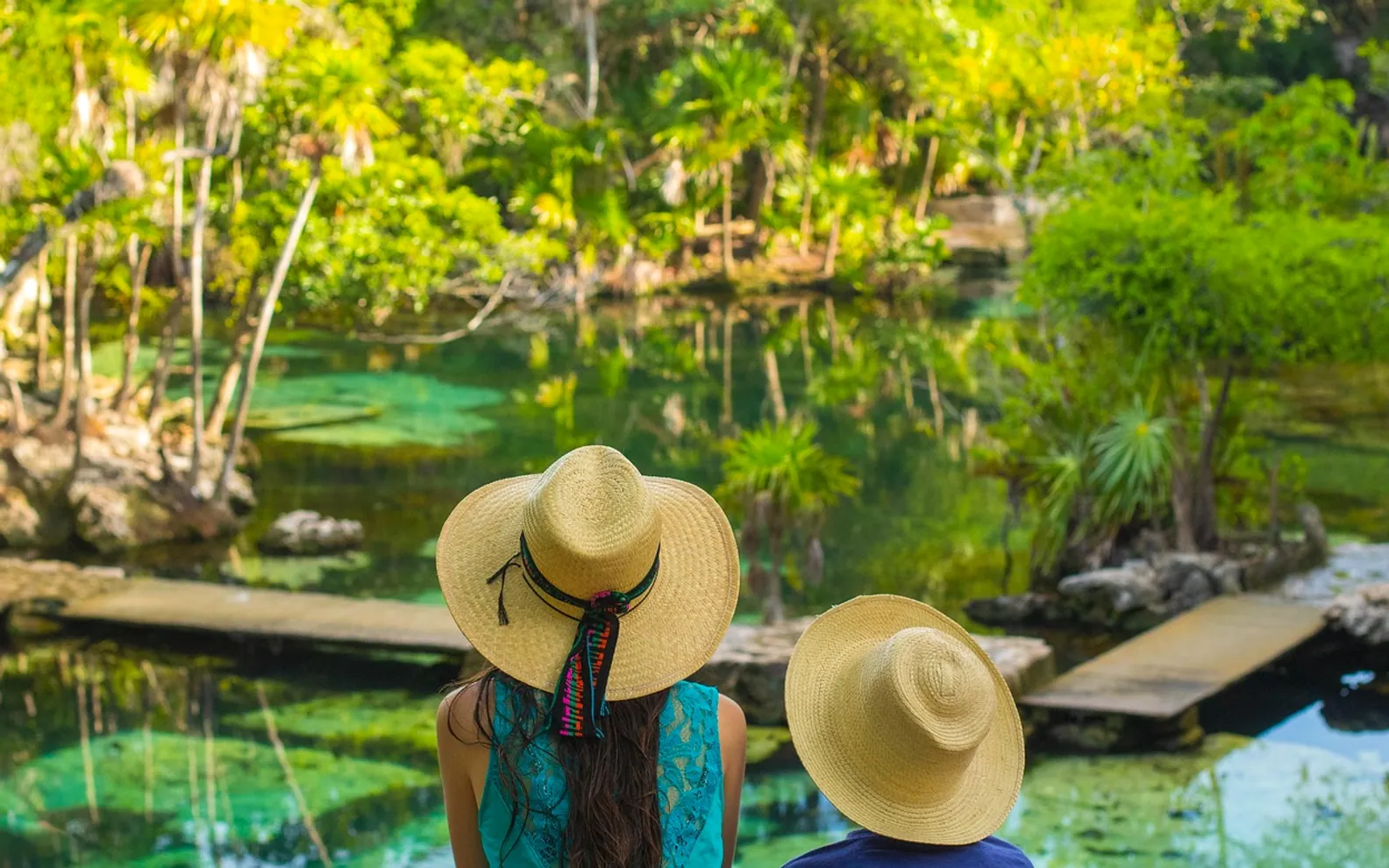
Drive inland from the Caribbean coast and the land looks almost entirely flat, covered in low, dense jungle. There are hardly any rivers running across the surface. Yet the region is full of fresh water; it simply flows underground. Every so often the ground opens up, and you find yourself looking down into clear, still water surrounded by rock and dangling tree roots. That opening is a cenote, and once you have swum in one, you will understand why people fall for them.
Where the word comes from
The cenote meaning traces back to the Yucatec Maya word dzonot, often written as ts'onot, which refers to a well or a hollow holding water. Spanish speakers adapted the sound into "cenote," and the word has since traveled into English and many other languages.
For the ancient Maya, these places were far more than swimming spots. In a landscape with few surface rivers, they were vital sources of drinking water, and some settlements grew up around them. Many cenotes also held religious meaning and were seen as entrances to the underworld. That history is worth keeping in mind when you visit. You are swimming somewhere that mattered deeply to people for a very long time.
How a cenote forms
The Yucatán Peninsula sits on a thick shelf of limestone, a rock that slowly dissolves when rainwater, which is slightly acidic, seeps through it. Over immense periods, that process carved caves and channels beneath the surface, many of which filled with water. When the roof of a cave weakens and collapses, the water below is exposed, and a cenote appears.
Because the water has filtered through rock, it is often remarkably clear, with a blue or green tint depending on depth and light. In many cenotes, fresh rainwater sits above a layer of heavier salt water that has crept in from the sea, and divers sometimes see a shimmering boundary where the two meet.
The main types
Cenotes are usually grouped by how much of the cave roof remains:
- Open cenotes have lost their roof entirely and look like a pond or small lake ringed by rock walls. They get plenty of sunlight and often have fish and plants in the water.
- Semi-open cenotes keep part of their roof, so you swim from daylight into a shaded cavern. Light often pours through the gap in dramatic beams around midday.
- Cave cenotes are mostly or fully enclosed, entered by stairs or a ladder through a small opening. They feel cool and quiet, and the rock formations above can be striking.
Each type has its own mood, and many visitors like trying one of each. Our guide to Puerto Morelos cenotes describes the options along the road heading inland from town.
Swim etiquette that protects the water
Cenotes are connected to the region's underground water system, which also supplies drinking water. What goes into one does not simply disappear. Most sites follow similar rules, and they are easy to respect:
- Shower before you get in. Most cenotes provide showers for rinsing off sweat, lotion and sand.
- Skip sunscreen and insect repellent before swimming. These products leave a film on the water and can harm the fragile ecosystem. If you need sun protection for the walk in, cover up with clothing instead.
- Wear a life jacket if one is provided or required. The water can be deep, and some sites make them compulsory. They also make floating and looking around much easier.
- Stay on paths and platforms. Do not climb on formations or break off any part of the rock.
- Keep noise down, especially in cave cenotes where sound echoes and other visitors are looking for some calm.
Making the most of your visit
Arrive early if you can. Mornings tend to be quieter, and you may have the water nearly to yourself. Bring a towel, a dry layer for the cooler caves, water shoes for slippery steps, and a waterproof pouch for your phone if photos are allowed. Diving and cave exploration are a separate activity entirely and should only be done with qualified guides.
A cenote swim pairs nicely with a slow beach day or an evening in town. If you are building a wider itinerary, our list of things to do in Puerto Morelos has ideas from reef trips to street food. However you plan it, take a moment to float quietly and look up. Few places on earth let you swim inside the landscape quite like this.
In the spotlight
Food
- The Best Street Food in Puerto Morelos You Can't Miss2 min read
- Five of the Rarest Fruit Trees Around the World2 min read
- Best of Puerto Morelos3 min read
- Music Festival in Puerto Morelos2 min read