Set 04 of 08
Guide to Puerto Morelos Cenotes: Nature's Hidden Pools
- First played
- Length2 min read
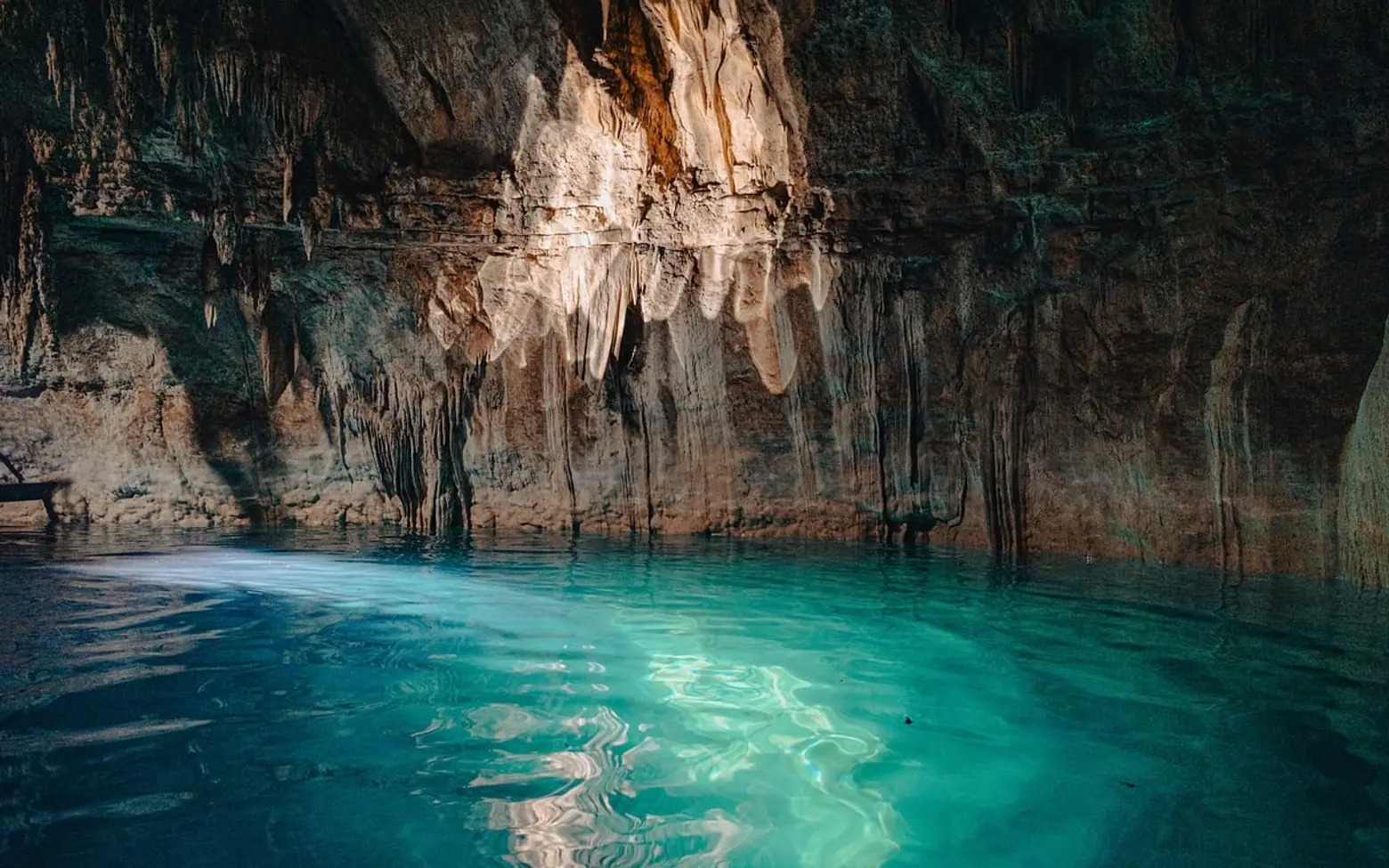
When the afternoon heat settles over Puerto Morelos and the beach feels too bright, locals have an answer that lies inland: a swim in a cenote. These freshwater pools hidden in the jungle stay cool all year, and several of the region's quieter ones sit a short drive from town.
How cenotes form
The Yucatán Peninsula is built on porous limestone. Over a very long time, rainwater seeped through the rock and carved a network of underground rivers and caves. Where a cave roof weakened and fell in, the water below was exposed to daylight, and a cenote was born. Some are wide, open pools ringed by vines; others are caverns reached by steps, lit only by a hole in the ceiling; many fall somewhere in between.
The name comes from the Maya word ts'onot. For the ancient Maya, these wells were sources of water in a land with few rivers, and they also held deep spiritual meaning as openings to the underworld. Many nearby communities still regard them with respect, and several are run by local families or ejidos.
Cenotes close to town
La Noria
A short drive inland, La Noria is a partly covered cenote reached by a wooden staircase. Sunlight falls through the opening overhead and paints shifting beams across the turquoise water below. It tends to be calm, and its family owners keep it in good shape.
Siete Bocas
As the name suggests, Siete Bocas has seven openings connected beneath the forest floor. Some of the pools sit under open sky, others lead into darker chambers where bats rest among the rock formations. Arrive early and you may have long stretches of quiet before other swimmers appear.
Exploring the Ruta de los Cenotes
The Ruta de los Cenotes is a road that heads inland from Puerto Morelos through the jungle, with turn-offs to many cenotes along the way. With a car or a rented bicycle you can link several in one morning. Well-known stops include Verde Lucero, an open pool with a zipline over the water; Boca del Puma, which pairs a cenote with forest trails; and Zapote, known for the unusual bell-shaped formations under its surface. Opening hours and entry fees vary and can change, so check locally before setting out, and carry cash since card payment is not always possible.
Tips for a good visit
- Start early. Mornings are quieter and the light inside the caverns is often at its best.
- Protect the water. Many cenotes ask visitors to rinse off before entering and to skip sunscreen and insect repellent; a long-sleeved swim shirt is a simple alternative.
- Mind your footing. Steps and rock edges can be slippery, so water shoes help.
- Know your limits. Some pools are deep; use a life jacket if you are not a confident swimmer and follow any rules posted by the owners.
- Leave it as you found it. Take your rubbish with you and keep voices low in enclosed caves.
Pair a morning of cenotes with an evening of music by the sea and you have a day that shows both sides of this stretch of coast: the bright Caribbean and the cool, quiet world hidden just behind it.

In the spotlight
Food
- The Best Street Food in Puerto Morelos You Can't Miss2 min read
- Five of the Rarest Fruit Trees Around the World2 min read
- Best of Puerto Morelos3 min read
- Music Festival in Puerto Morelos2 min read