Set 10 of 11
Beyond the Shore: The Global Influence of Afro-Caribbean Rhythms
- First played
- Length3 min read
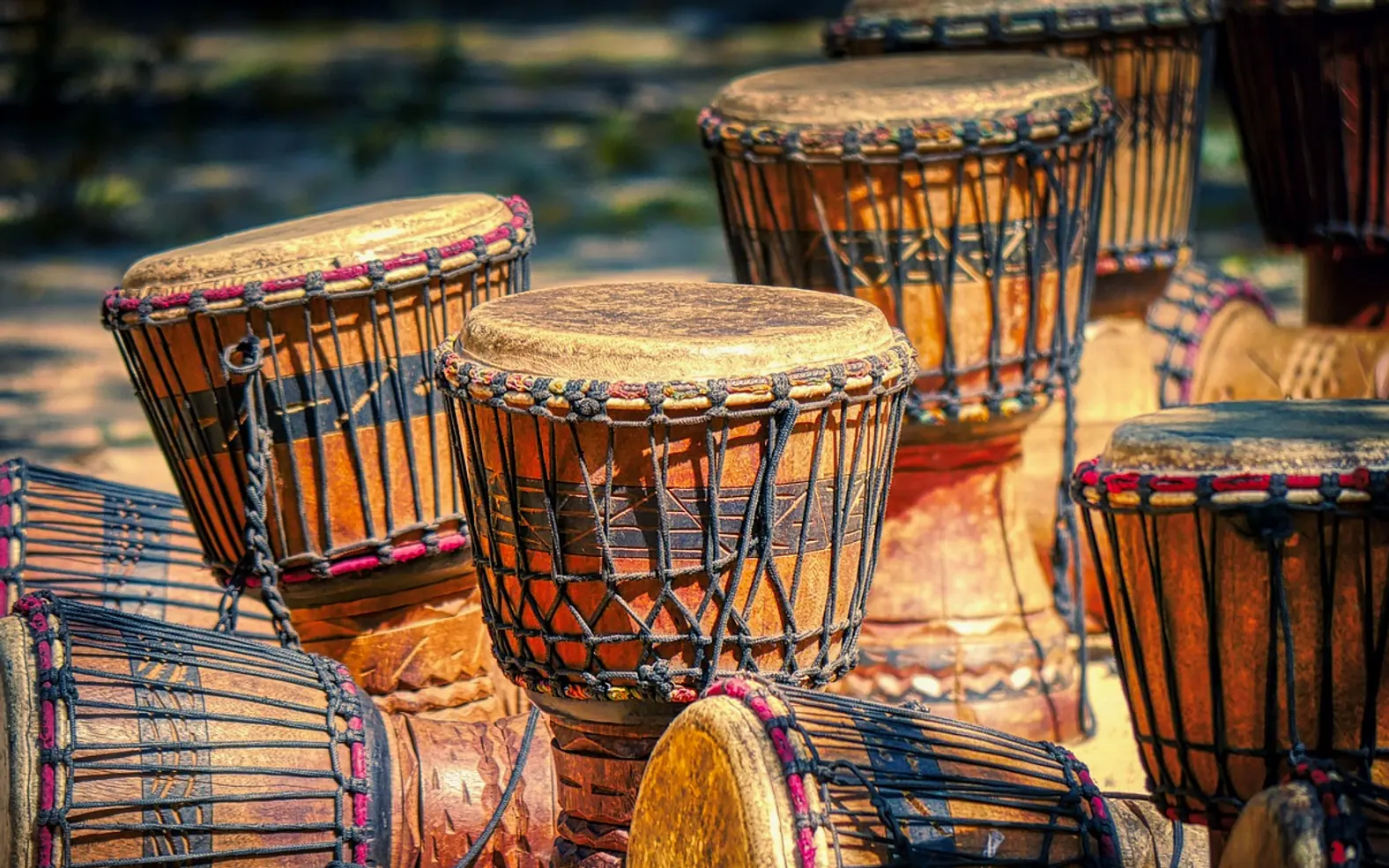
Stand near the stage at any open-air show on this coast and watch what happens when the percussion section locks in. People who arrived as strangers start moving to the same pulse. That pulse has a long history. Many of the grooves heard in clubs, stadiums and street parties around the world trace back to rhythms that took shape in the Caribbean, where African traditions met European instruments and the musical habits of the islands' earlier peoples.
A pattern that holds everything together
Much of that story starts with the clave, a short, asymmetrical rhythmic cell that musicians in Cuban and related styles use as a reference point. Played on two wooden sticks or simply felt by the band, it tells every other instrument where it stands. Musicians speak of a "3-2" or "2-3" direction, and playing against the clave is heard as a mistake rather than a matter of taste.
Ideas like this did not stay on the islands. Port cities linked the Caribbean with the American Gulf Coast, and early jazz musicians in New Orleans absorbed rhythms such as the habanera. Jelly Roll Morton famously called that flavor the "Spanish tinge" and treated it as an essential ingredient. Later waves of mambo, cha-cha-chá and, via Brazil, bossa nova carried related syncopations into dance halls and record collections far away.
Jamaica and the weight of the low end
Jamaica's contribution feels out of all proportion to its size. Ska, rocksteady and then reggae each pushed the bass guitar further forward until it became the melodic center of the song rather than a quiet support. Sound-system culture, with its huge speaker stacks, made that bass something the audience felt in the chest.
In the studio, producers such as King Tubby and Lee "Scratch" Perry pulled songs apart, dropped instruments in and out and drenched what remained in echo. Dub, as it came to be known, helped popularize the idea of the remix and fed directly into hip-hop's early sound systems and, later, many strands of electronic dance music.
Salsa and the city
Meanwhile, musicians from Cuba, Puerto Rico and their communities in New York were building salsa. It drew on Cuban son, big-band arranging and the energy of the city's Latin neighborhoods, and it carried a strong sense of identity for the people who made and danced to it. The rolling bass pattern known as the tumbao is central to its pull. That same lineage echoes in today's Latin pop and reggaeton, which travel easily between languages and continents.
Back across the Atlantic
The newest chapter loops back to where much of this began. Afrobeats, the contemporary West African pop sound (not to be confused with Fela Kuti's older Afrobeat), trades ideas freely with Caribbean dancehall. Producers mix Jamaican-style riddims with highlife guitar lines and Nigerian percussion, and collaborations between African and Caribbean artists have become common. The result sounds at home on a city dance floor and on a beach after sunset.
Why it still matters on our shore
Puerto Morelos faces the Caribbean Sea, so these rhythms feel less like imports than like neighbors. They are built for bodies in motion and for call and response between band and crowd, which is exactly what makes a festival come alive. Each time a drummer leans on an offbeat or a bass line refuses to sit still, a centuries-long conversation keeps going, and anyone on the dance floor is part of it.
In the spotlight
Food
- The Best Street Food in Puerto Morelos You Can't Miss2 min read
- Five of the Rarest Fruit Trees Around the World2 min read
- Best of Puerto Morelos3 min read
- Music Festival in Puerto Morelos2 min read