Set 11 of 11
A Listener's Guide to Caribbean Music Styles
- First played
- Length3 min read
Stand anywhere along this coast on a weekend evening and you will probably hear three or four kinds of music before you finish a drink. A car rolls by playing cumbia, a bar has salsa on, and someone down the beach is strumming something that sounds faintly like reggae. Caribbean music is not one genre but a whole family, built over centuries from African rhythms, European instruments and melodies, and Indigenous traditions, then reshaped island by island.
If you want the deeper history of how those rhythms crossed oceans, read our feature on the global influence of Afro-Caribbean rhythms. This guide is the practical companion: what each style sounds like and how to pick it out by ear.
Cuba: son and its famous child, salsa
Son comes from eastern Cuba and is often described as one of the foundations of modern Latin dance music. Listen for the tres, a small guitar-like instrument with doubled strings, along with bongos, maracas and the clave, the wooden sticks that tap out a repeating pattern the whole band locks onto. Son songs often move from a verse section into a looser, call-and-response part where the lead singer improvises and the chorus answers.
Salsa grew out of son and related Cuban forms, developed largely by Caribbean musicians in New York. It adds a brass section, piano patterns that repeat in tight cycles, and a driving energy made for packed dance floors. If you hear trumpets and trombones punching short phrases over a busy percussion bed, you are probably in salsa territory.
Jamaica: the reggae family
Reggae is easy to recognize once you know where to listen. The guitar or keyboard often plays short, choppy chords on the offbeat, the bass is deep and melodic, and the overall pace feels relaxed even when the lyrics are urgent. It emerged in Jamaica in the late 1960s, following earlier styles like ska and rocksteady, and went on to spread worldwide.
Reggae lyrics often carry social and spiritual themes, and the genre gave rise to offshoots such as dub, with its echo effects and stripped-back mixes, and dancehall, which is faster and more electronic.
Trinidad and Tobago: calypso, soca and steel pan
Calypso is storytelling music. Traditionally, singers used witty, sometimes pointed lyrics to comment on politics, news and daily life, and it is closely tied to Carnival. Soca, short for "soul of calypso," arrived later with faster tempos and a heavier emphasis on dancing and celebration.
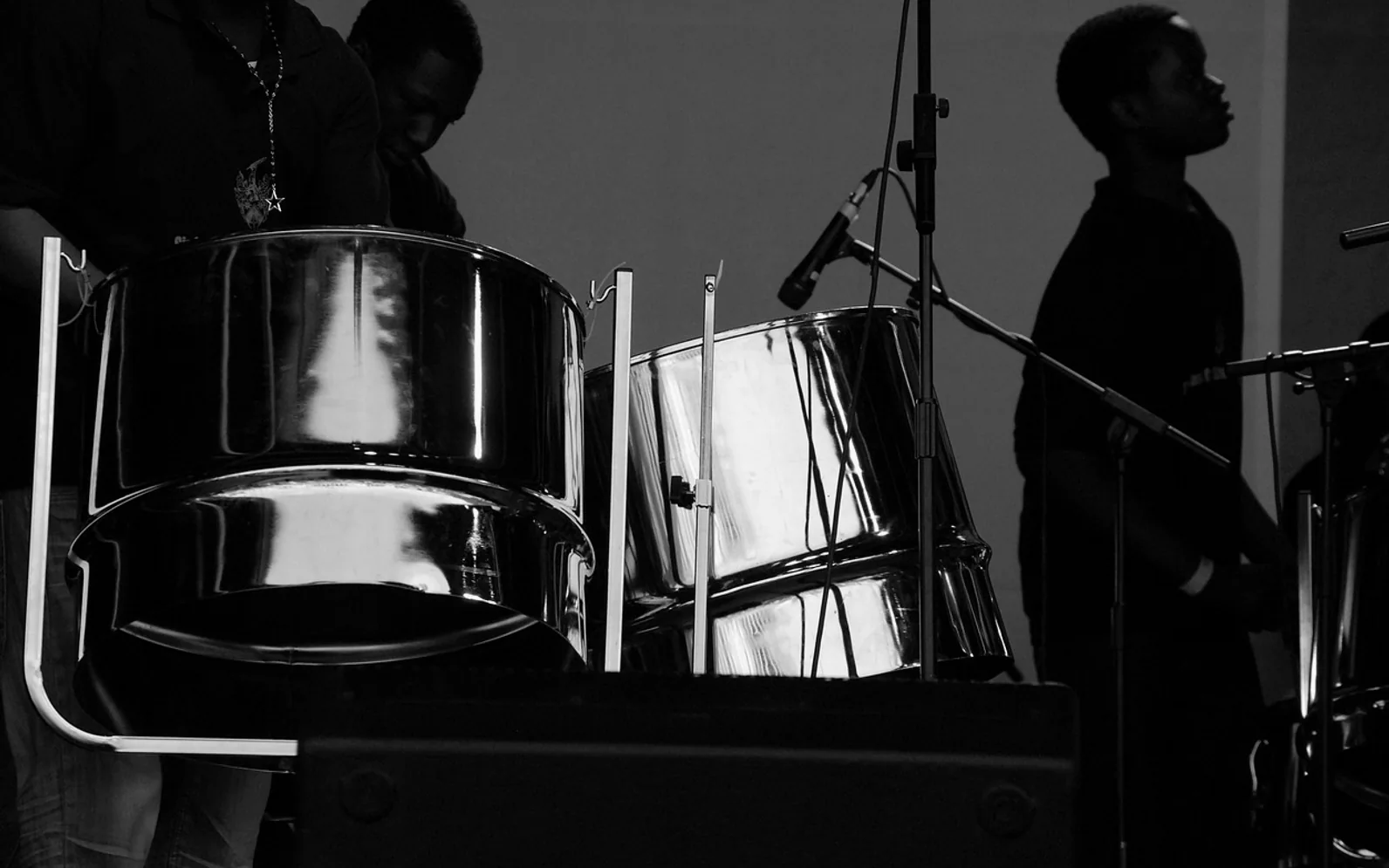
The steel pan deserves its own mention. It was developed in Trinidad in the twentieth century, when musicians shaped oil drums into tuned instruments. A full steel band, with pans covering high melodies down to deep bass, produces a shimmering sound that feels instantly tropical. Hearing one live is something we recommend to anyone.
Colombia and the Dominican Republic
Not every Caribbean rhythm comes from an island. Cumbia began on Colombia's Caribbean coast and became beloved across Latin America, with Mexico developing many regional versions of its own. Its steady, swaying beat, often carried by a scraped guacharaca or güiro, is easy to dance to, which is part of why it spread so widely.
From the Dominican Republic come two very different styles:
- Merengue is fast and cheerful, with a quick two-step pulse, the tambora drum and often an accordion or saxophone up front.
- Bachata is slower and more romantic, built around bright, picked guitar lines and lyrics about love and heartbreak. Once dismissed by some as rural music, it is now enormously popular.
How to tell them apart by ear
A quick cheat sheet for your next night out:
- Choppy offbeat chords and a deep bass line: reggae.
- Brass stabs, piano loops and fast percussion: salsa.
- A tres guitar and call-and-response singing: son.
- Shimmering metallic melodies: steel pan.
- Steady sway with a scraper keeping time: cumbia.
- Rapid, bouncy two-step with accordion: merengue.
- Sweet guitar picking and heartfelt lyrics: bachata.
Where jazz fits in
Caribbean musicians have shaped jazz for a long time, and the crossover runs both ways. Latin jazz pulls Cuban rhythms into improvised solos, and many island musicians blend local percussion with jazz harmony. If that sounds appealing, our piece on a sunset jazz night in the Caribbean captures how those sounds feel by the water as the light fades.
The best way to learn any of this is simply to listen and, if you are brave enough, dance. Nobody on a Caribbean dance floor expects perfect steps. They just want you to feel the rhythm.
In the spotlight
Food
- The Best Street Food in Puerto Morelos You Can't Miss2 min read
- Five of the Rarest Fruit Trees Around the World2 min read
- Best of Puerto Morelos3 min read
- Music Festival in Puerto Morelos2 min read